


The speakers of the Huawei Industrial Talks are (click on the links for abstracts and speaker bios):
- Huazi Zhang (13:00 Friday, July 3, Room 603B)
- Xueyan Niu (13:40 Friday, July 3, Room 603B)
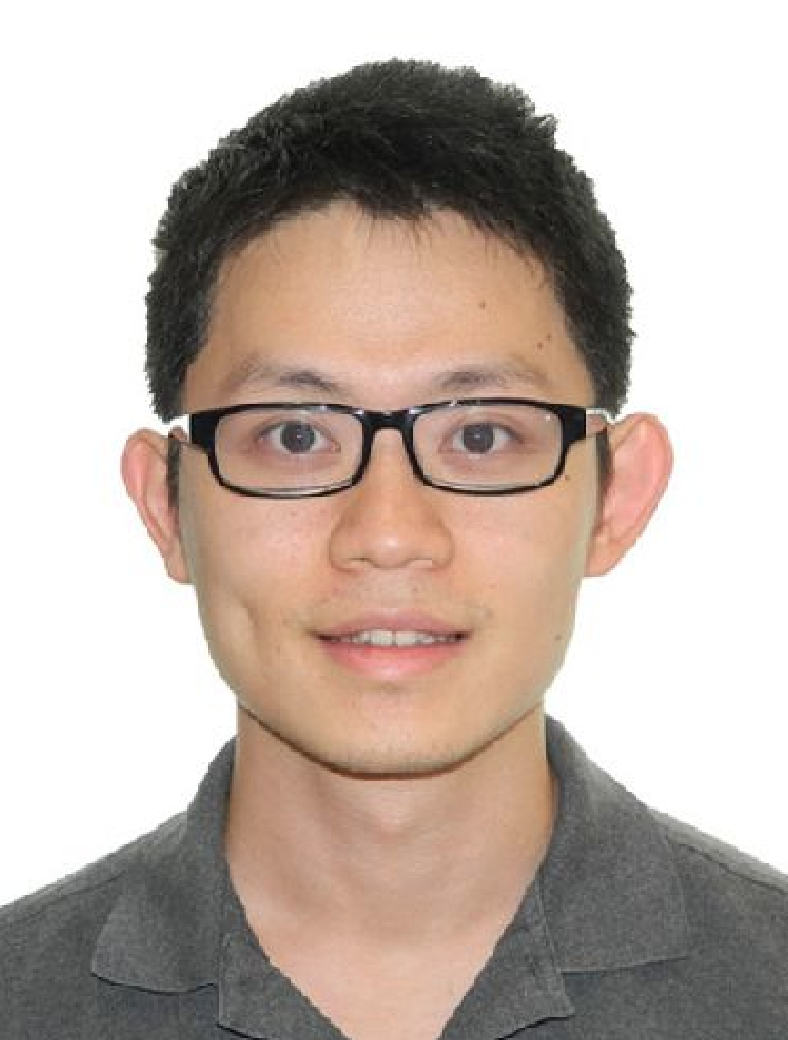
Huazi Zhang:
Title: Latest Advances in Polar Codes: Stitched Structures, Rateless IR-HARQ, and SCL Performance Analysis
Abstract: This talk presents Huawei's latest advancements in polar coding research. We propose novel code constructions and analytical framework targeting performance flexibility and theoretical understanding. For fine-granularity length adaptation, we demonstrate stitched polar codes that solve performance degradation at non-power-of-two lengths. For incremental redundancy (IR) HARQ design, we present the breakthrough of rateless polar codes to support flexible raptor-like transmissions via capacity-aware decoding scheduling. Furthermore, for decoding performance evaluation, we introduce a path-survival model that solves accurate modeling of SCL performance. Overall, these advancements demonstrate polar codes' advantage to address the diverse requirements of wireless applications. Some references are given below:
- Stitched Polar Codes
- Beyond 1→N Decoding: Capacity-Aware Rateless Polar Codes for IR-HARQ
- A Path-Survival Analytical Framework for SCL Decoding of Polar Codes
Bio: Dr. Huazi Zhang (Senior Member, IEEE) received his B.Sc. and Ph.D. degrees from Institute of Information and Communication Engineering in 2008 and 2013, respectively, from Zhejiang University. From 2011 to 2013, he was a visiting researcher with the Department of Electrical and Computer Engineering, North Carolina State University, Raleigh, NC, USA. From 2013 to 2014, he was a Research Fellow with the School of Computer Engineering, Nanyang Technological University, Singapore. From 2014 to 2015, he was a Research Scholar with the Department of Electrical and Computer Engineering, University of Florida, Gainesville, FL, USA. He joined Huawei Technologies Co., Ltd in 2015. Since then, he has engaged in research projects on advanced wireless communications involving channel coding and signal processing techniques, and engaged in multiple standardization activities. His contribution led to the adoption of many state-of-the-art research results into 5G standards, as well as the subsequent commercial rollout. His current research interests are channel coding, information theory and signal processing for wireless communications, with focus on theoretical analysis, algorithm design and hardware implementations for 6G and beyond. He serves on the Alumni in Industry Ad Hoc Committee for the IEEE Information Theory Society.
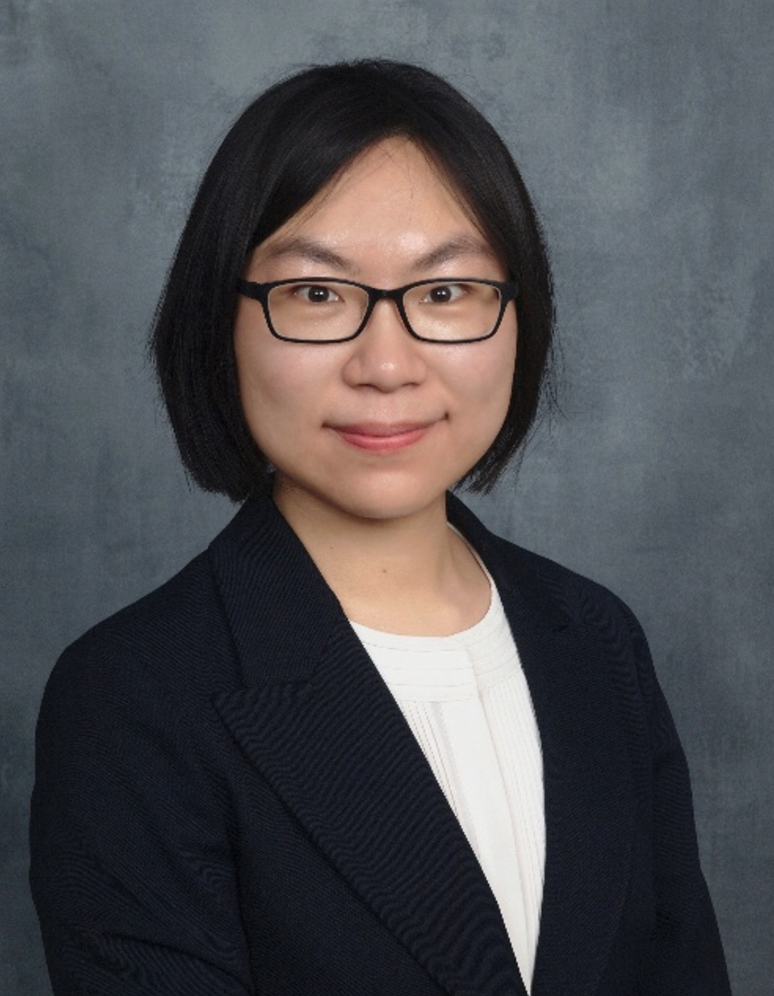
Xueyan Niu:
Title: Knowledge Management in the Age of AI Agents: Compression, Editing, Reasoning, and Post-training
Abstract: Modern AI agents face significant challenges in managing knowledge effectively, given the need to process increasingly large contexts, maintain up-to-date information, perform complex reasoning, and adapt through training. This talk presents a systematic framework that addresses these demands through four interconnected capabilities. First, we introduce semantic context compression techniques that extend effective context windows while achieving inference speedup. Second, we present a neural key-value database architecture enabling precise, scalable editing of over 100,000 facts without retraining. Third, we present a dynamic in-context editing approach that allows agents to reorganize knowledge during inference, substantially improving multi-hop reasoning. Finally, we establish the interdependence of supervised fine-tuning and reinforcement learning in post-training, demonstrating the necessity of joint optimization compared to sequential training.
Bio: Xueyan Niu has been a Principal Engineer with the Theory Lab at Huawei Technologies Co., Ltd. since 2022. She received her Ph.D. degree in operations research from Purdue University, West Lafayette, IN, USA, in 2021 and the B.S. degree in mathematics and applied mathematics from Peking University, Beijing, China, in 2016. Her research lies at the intersection of machine learning, information theory, and communications. She focuses on foundational aspects of generative modeling and efficient data representation, with applications in large language models, image, and video processing. She has been recognized with several honors, including the EECS Rising Stars by UC Berkeley, the Outstanding Early Career Researcher Paper Award at the IEEE ISITA conference, and Huawei's Future Star award. Her work has been published in information theory journals such as IEEE Transactions on Information Theory and at AI conferences including NeurIPS, ICLR, and ACL. She has served as a Guest Editor for journals including IEEE Network and Entropy and has co-organized workshops including ML4Wireless at ICML 2025, ML4Wireless at AAAI 2026, and IT4LLM at ISIT 2026.